Independent learning: Learn, Do, Check

Provided by Lillian Blakeley

I have a problem with pupils who ask me after a lesson introduction and demonstration what they are doing in that lesson. In order for me to not lose my cool, I started writing out my lesson objectives and success criteria slightly differently… I added a middle column ‘Do’ so that I could write a list of what pupils need to DO to LEARN. The ‘Learn’ is always phrased ‘how to…’ and the ‘Check’ is always a question.

See examples below… If/when I get the annoying question ‘what am I doing this lesson’?’ I can simply point to the board or ask a pupil where they need to look to find out that information.

I keep all the slides and add to them so it becomes a series which I can modify and re-use.

It is also an easy way to differentiate – the Do-list can include extension tasks and move the lower abilities pupils quicker (it is the higher ability students who take the longest in Art).
This slideshow requires JavaScript.


Questioning Grid

Provided by Jenny Pritchard

The questioning grid helps ensure that you are asking high order questions to students to challenge them within lessons. It can be used in a variety of ways:

  1. As a prompt on your desk to ask questions which provide the right level of support for the various groups/students/topics in your lesson
  2. As a tool for students to design their own questions and to understand the higher level requirements
  3. As a reflection of the questions that students ask about the lesson
  4. As a plenary – you could ask students to write a question about what they have learnt and ask for them to be within the synthesis area etc.
  5. A form of active revision for students.

This slideshow requires JavaScript.

Modelling Reading

Provided by Sarah Dukes.

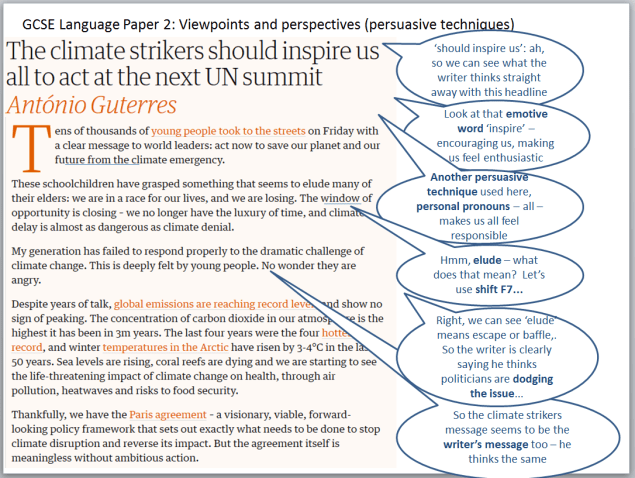
Modelled reading is a strategy which allows the teacher to explicitly demonstrate the process of reading by ‘thinking aloud’ about the strategies that are being used to decode words, comprehend meaning and read with fluency and expression.

Modelled reading involves students listening to a text read aloud by the teacher. The teacher models skilled reading behaviour, enjoyment and interest in a range of different styles of writing and types of text. It provides an opportunity for teachers to demonstrate their enjoyment in reading, and allows students to see a purpose in independent reading.

Modelling reading

For further information go to: https://www.education.vic.gov.au/school/teachers/teachingresources/discipline/english/literacy/readingviewing/Pages/teachingpracmodelled.aspx

You can also find more information in the CPD folder on Staff Academic.